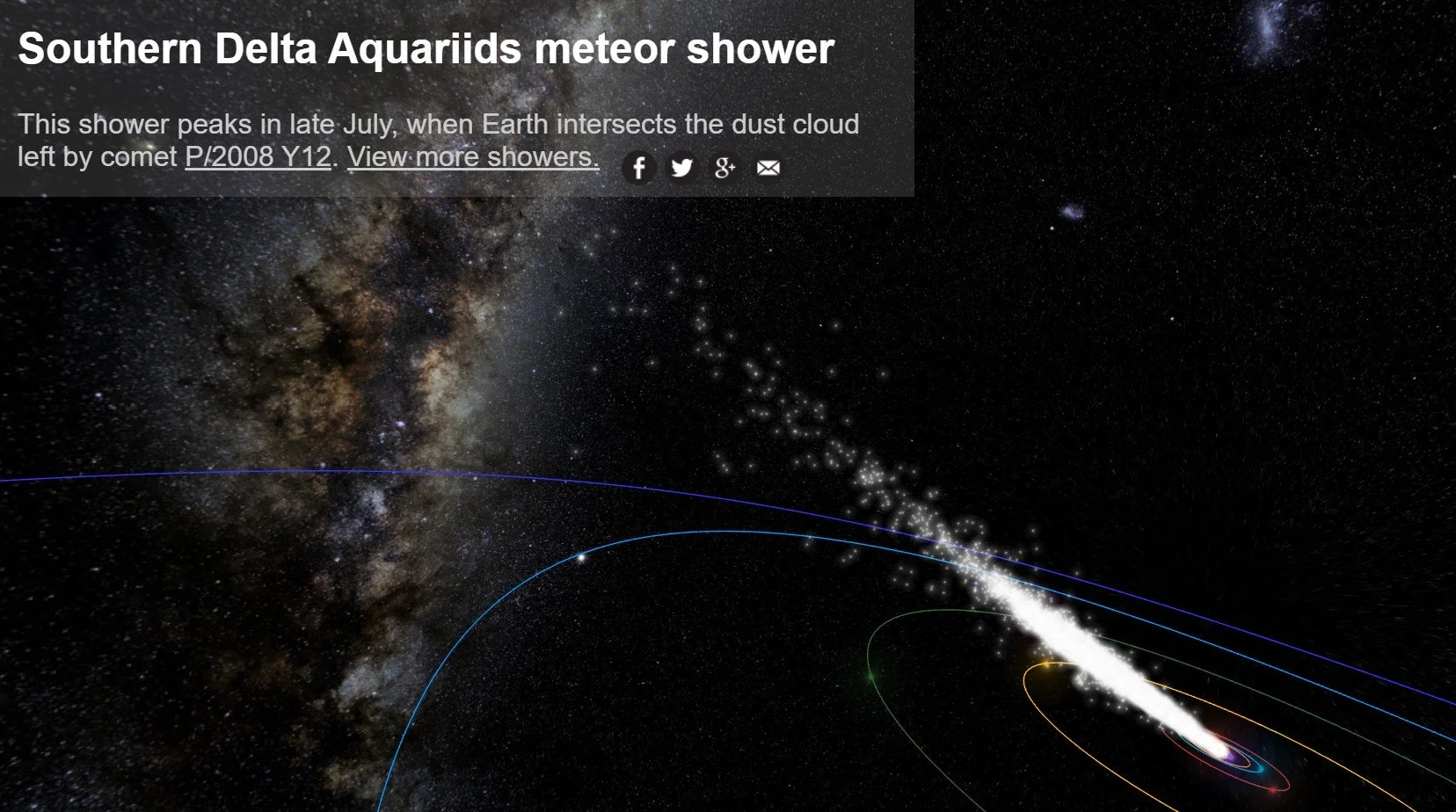
The Southern delta Aquariids peak on the night of July 30-21!
Currently active: Active from July 12th to August 23rd, 2026
North of the equator the radiant is located lower in the southern sky and therefore rates are less than seen from further south. These meteors produce good rates for a week centered on the night of maximum. These are usually faint meteors that lack both persistent trains and fireballs. In 2026, the full moon occurs only two days prior to the peak therefore activity will be severely compromised y the bright moonlight .
Best viewing is after midnight looking toward the southern sky. In southwest Washington, head 30–60 minutes away to dark-sky spots like Larch Mountain or Silver Star Mountain to avoid city light pollution.
Optimal viewing for the Delta Aquarids involves several steps:
Timing: The radiant (near the constellation Aquarius) is highest in the sky between 2:00 a.m. and 3:00 a.m. local time.
Rate: Under perfectly dark skies, you can expect to see 15 to 20 meteors per hour.
Moon Phase: A bright moon is active during the 2026 peak, which will unfortunately wash out the fainter meteors. It is recommended to look for the shower in the days leading up to the peak to minimize moonlight interference.
Directions: Find a spot shielded from city glow, recline on a lawn chair, and take in the whole sky rather than looking in just one direction.
Information sourced from the American Meteor Society. Learn more about this and other skywatching events at https://www.amsmeteors.org/meteor-showers/meteor-shower-calendar/
(Photo source: Bill Ingels, NASA via AP)